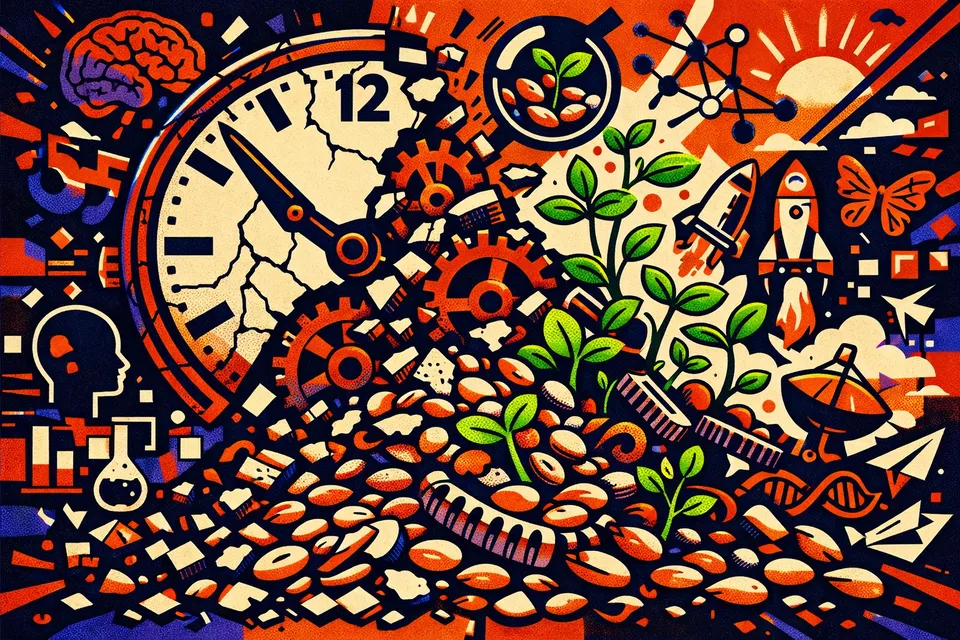
Most organizations are still built like machines. You design the parts, assemble them, add controls, and expect predictable output. It works... until the environment changes faster than you can retool. Ecosystem architecture is different. Instead of designing rigid structures, you cultivate conditions where people and ideas can adapt, evolve, and self-organize. You are not controlling outcomes. You're stewarding relationships. The shift sounds subtle. It is not. Traditional organizations optimize for efficiency. Ecosystems optimize for resilience. Traditional organizations have clear hierarchies. Ecosystems have distributed authority. Traditional organizations resist change. Ecosystems expect it. This matters because our context has changed. Knowledge work is too complex, too distributed, too fast for command-and-control. The organizations that will thrive are the ones that work like living systems: where information flows freely, where people can experiment without permission, where failure teaches faster than success. I have been exploring this for years: through Offcourse, through Varias, and now through Rizom. Each project taught me that the future belongs to those who can design for emergence rather than control. Want to understand the philosophy behind this shift? I have written about it here: https://yeehaa.io/essays/practice-innovation What is your experience? Are you seeing organizations move toward this model, or are the old structures still holding strong? #EcosystemArchitecture #OrganizationalDesign #FutureOfWork #Leadership #KnowledgeSystems
Ecosystem Architecture vs Traditional Design
publishedlinkedinlinkedin-ecosystem-architecture-vs-traditional-design
Created: April 1, 2026 at 8:01 AM
Published: February 24, 2026 at 6:08 AM